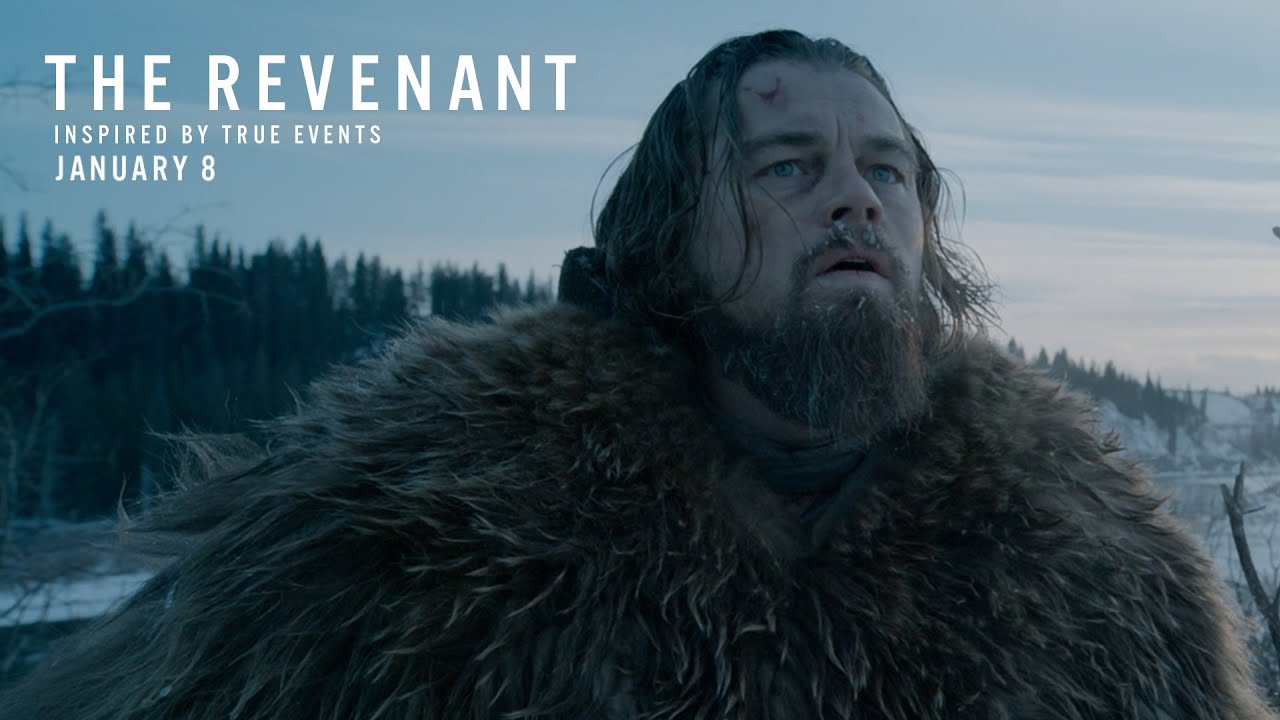
Imagine The Revenant as a knight in shining armor, brilliant, beautiful armor made from the finest iron mined in the wilderness of the North and honed in the finest forge. Behind that shiny brilliance, picture the face of Leonardo DiCaprio, ruggedly honest, earnest, and determined to avenge his son. So detailed and realistic is the armor and so natural DiCaprio's performance, that viewers have no choice but to tumble head-long into the rapids of this overwhelmingly brutal, yet beautiful struggle for survival.
But, just as one is willing to dedicate themselves fully to witnessing this knight in combat, the subtle flaws in the armor's design reveal themselves. The seems are just wide enough for an observant critic to shoot a kill-shot into the spleen of Alejandro González Iñárritu's acclaimed classic, bleeding the film's unacceptable flaws for all to see onto the white snow.
Take one: As evident in the picture above, the narrative is loosely based on true events. By stating this, the film is already defining itself through the standards of realism. In addition to marketing, realism is further enhanced by the production design of the film itself. Cinematographer Emmanuel Lebezki took great lengths to shoot the film using primarily natural lighting to produce what friend and fellow cinematographer Roger Deakins has described as a "moving camera hand-held... Terry Malick kind of look," a purely "naturalistic style of lighting" similar to his work in Terrence Malick's The Tree of Life (2011) (Variety). Supposedly, the only instance of artificial lighting in the whole film occurred while filming a campfire in a particular scene to elevate the shadows around the flames. With such attention to detail and tenderness for the photography, the cinematography in The Revenant is beautiful and presents the elegant armor for González Iñárritu's direction. In performance, Leonardo DiCaprio likewise focused immensely on attaining a supreme form of realism through an elevated method-acting beyond which has been experienced in popular cinema. Most notably, he has supposedly eaten raw bison liver, slept inside a dead animal, learned pieces of the First Nation language, and endured stages of grueling conditions including hypothermia.
 |
| Emmanuel Lebezki shooting a scene from The Revenant |
 |
| Hugh Glass being brutally mauled by the bear |
Take four: The frozen river. After temporarily healing his neck wound with fire (again the plausibility of not bleeding out from such a wound is highly questionable), Glass is surrounded by the same native war-party that attacked his team at the start of the film. To escape, he slips into the river and careens down rapids and waterfalls beside floating ice drifts, dodging arrows and rocks while swimming toward some stable ground. Not only would he have died from hypothermia within minutes, he would have drowned due to the swiftness of the river, the overwhelming weight of the bear pelt on his body, and the fact that his leg had just recently been maimed by the bear.
Take five: Eating raw meat when a fire is at hand. Yes, Glass was starving, but so starving that he had to immediately eat raw fish and bison without cooking it on the fire right in front of him?
 |
| Alejandro González Iñárritu directing in The Revenant |
 |
| Birdman or (The Unexpected Virtue of Ignorance) (2014) |
Disappointingly, like the dragon Smoug in Tolkien's The Hobbit, The Revenant, though majestic, is slain by a chink in the scales, by a lack of minute details in realism in which it has maintained its cinematic foundation. Essentially, the film fails to accept the laws of its own universe, thus falling short from The Tree of Life-like masterpiece it could have been.

No comments:
Post a Comment